If your French press coffee has ever come out gritty, bitter, or weirdly weak, you are not alone, and it is almost never the coffee’s fault. French press is one of the most forgiving brewers there is, but a few small habits separate a muddy cup from a rich, clean one.
This guide shows you how to make French press coffee that comes out right every time, with exact ratios, timing, and the little tricks that fix common problems. It is one of the most affordable paths to better coffee at home.
Why French press coffee is worth mastering
The French press uses full immersion, meaning the grounds soak in the water for the entire brew. That gives a heavy, full-bodied cup with plenty of natural oils, since the metal mesh lets those oils through instead of trapping them in paper.
It is also cheap and nearly indestructible, which is why it shows up on almost every list of best coffee gear for beginners. Once you dial it in, it delivers cafe-quality richness for a few dollars of equipment.
Because there are no paper filters to buy and no electricity involved, it is also one of the most economical ways to brew day after day. That combination of low cost and big flavor is hard to beat for a beginner.
What you need
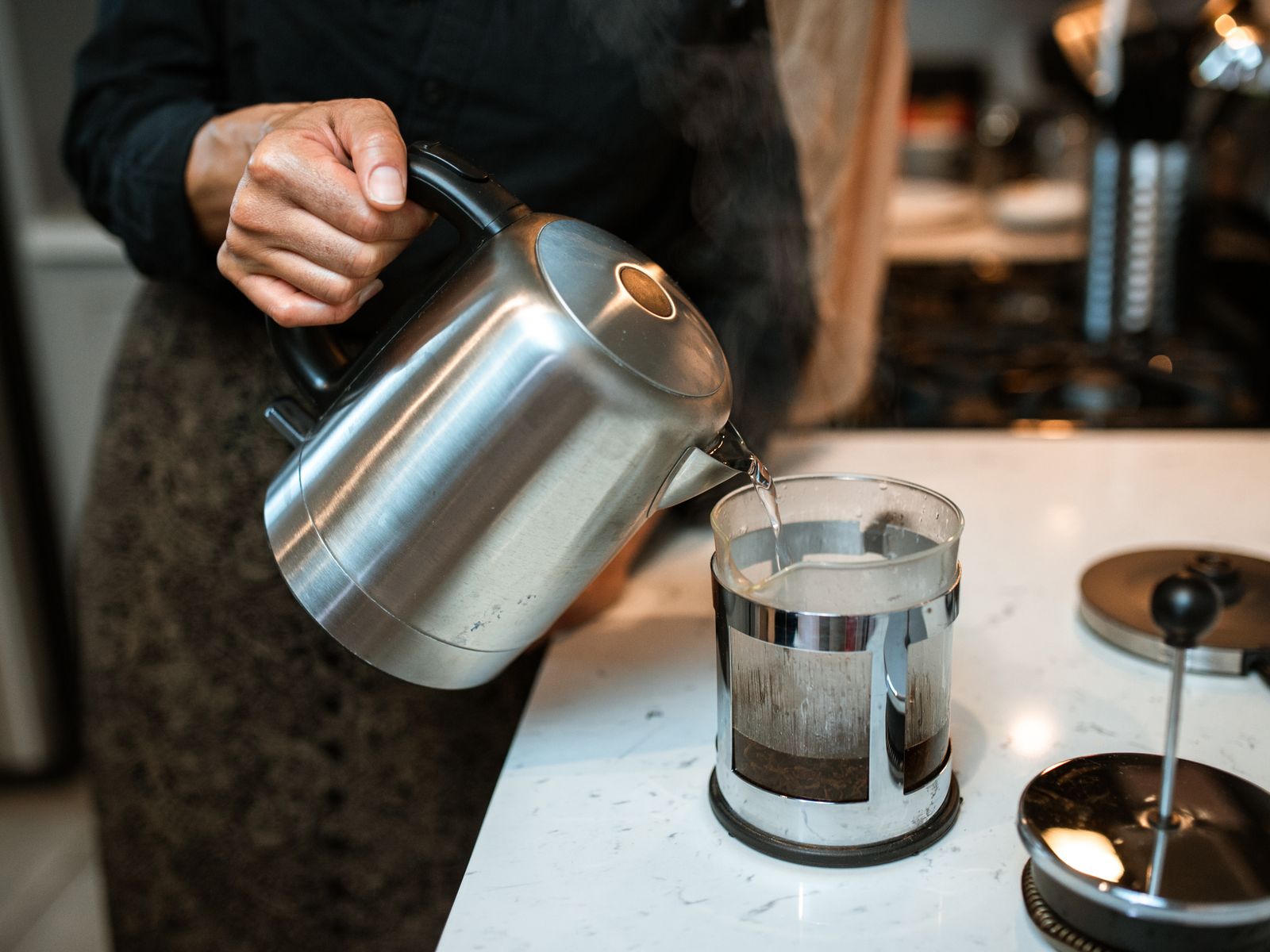
All it takes is a French press, coarse coffee, hot water, and ideally a scale and a timer. That is it, and most of it lives in your kitchen already.
Get the grind right
Grind is the number one reason French press goes wrong. You want a coarse grind, about the size of sea salt or breadcrumbs, so the mesh filter can hold it back cleanly.
Too fine and you get sludge in the bottom of your cup plus a bitter, over-extracted brew. Choosing the correct grind size for immersion brewing is the single biggest fix most people need.
If you rely on pre-ground coffee, look for grounds labeled specifically for French press, and even then expect a bit more sediment. A burr grinder set coarse will always give you the cleanest possible cup.
Nail the ratio and water temperature
Start with a 1:15 ratio for a robust cup, which is 1 gram of coffee to 15 grams of water. For a common 32-ounce press that means roughly 60 grams of coffee to 900 grams of water.
Heat your water to 195°F to 205°F, or boil it and wait about 30 seconds. That range extracts sweetness without scorching the grounds.
The step-by-step French press method
The rhythm is simple once you have done it a couple of times. Follow these steps for a clean, consistent cup.
- Add coffee. Put your coarse grounds into the empty, dry press.
- Pour and saturate. Add all the hot water, making sure every ground is wet, and start your timer.
- Wait and stir. At about one minute, gently stir the crust that forms on top, then set the lid on without pressing.
- Steep to four minutes. Let it brew for a total of four minutes.
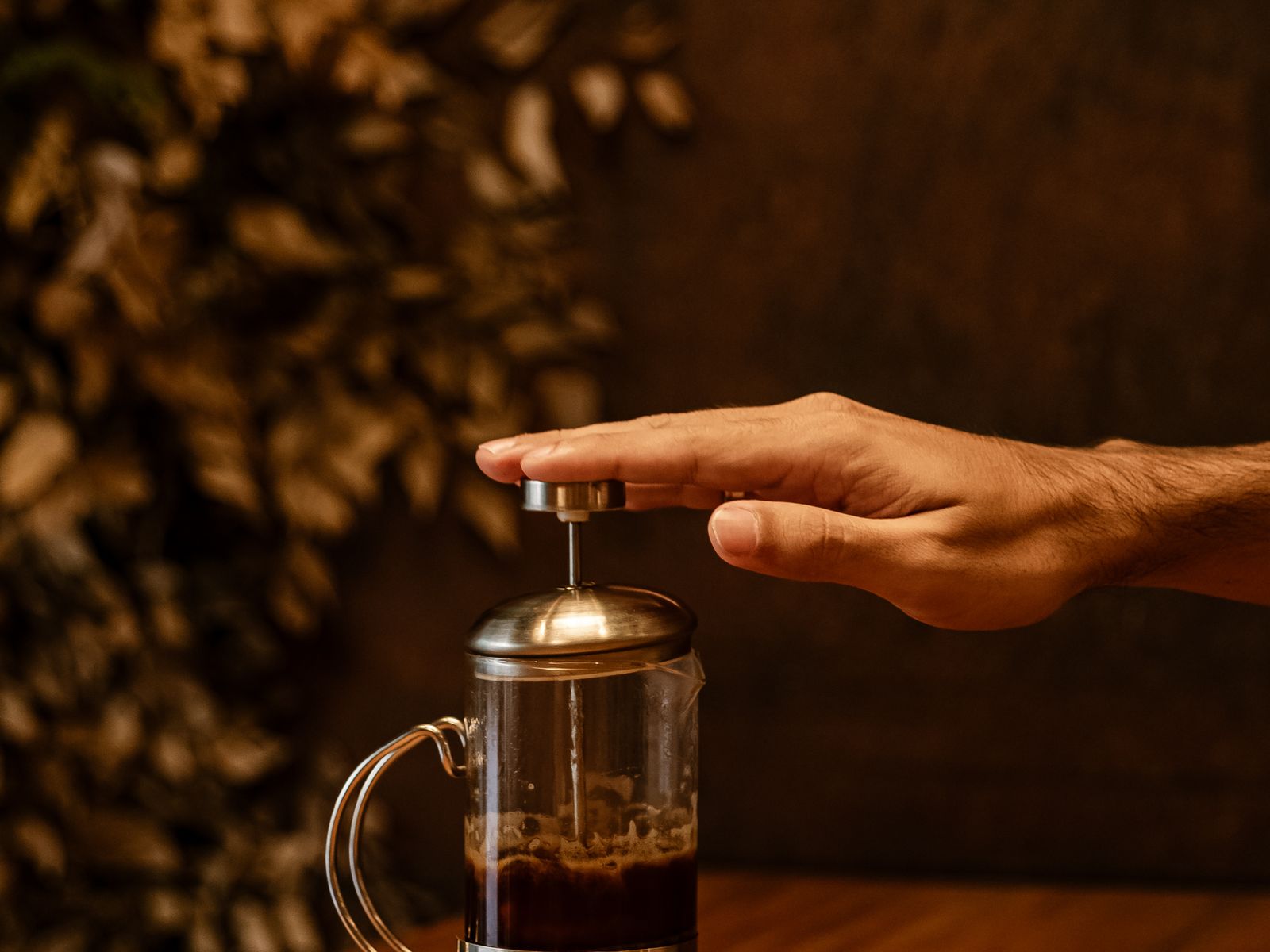
- Press slowly. Push the plunger down gently and steadily, then pour right away.
Pour it all out immediately
Here is a trick most people miss: never let coffee sit in the press after brewing. Leaving it on the grounds keeps extracting, turning your second cup bitter and harsh.
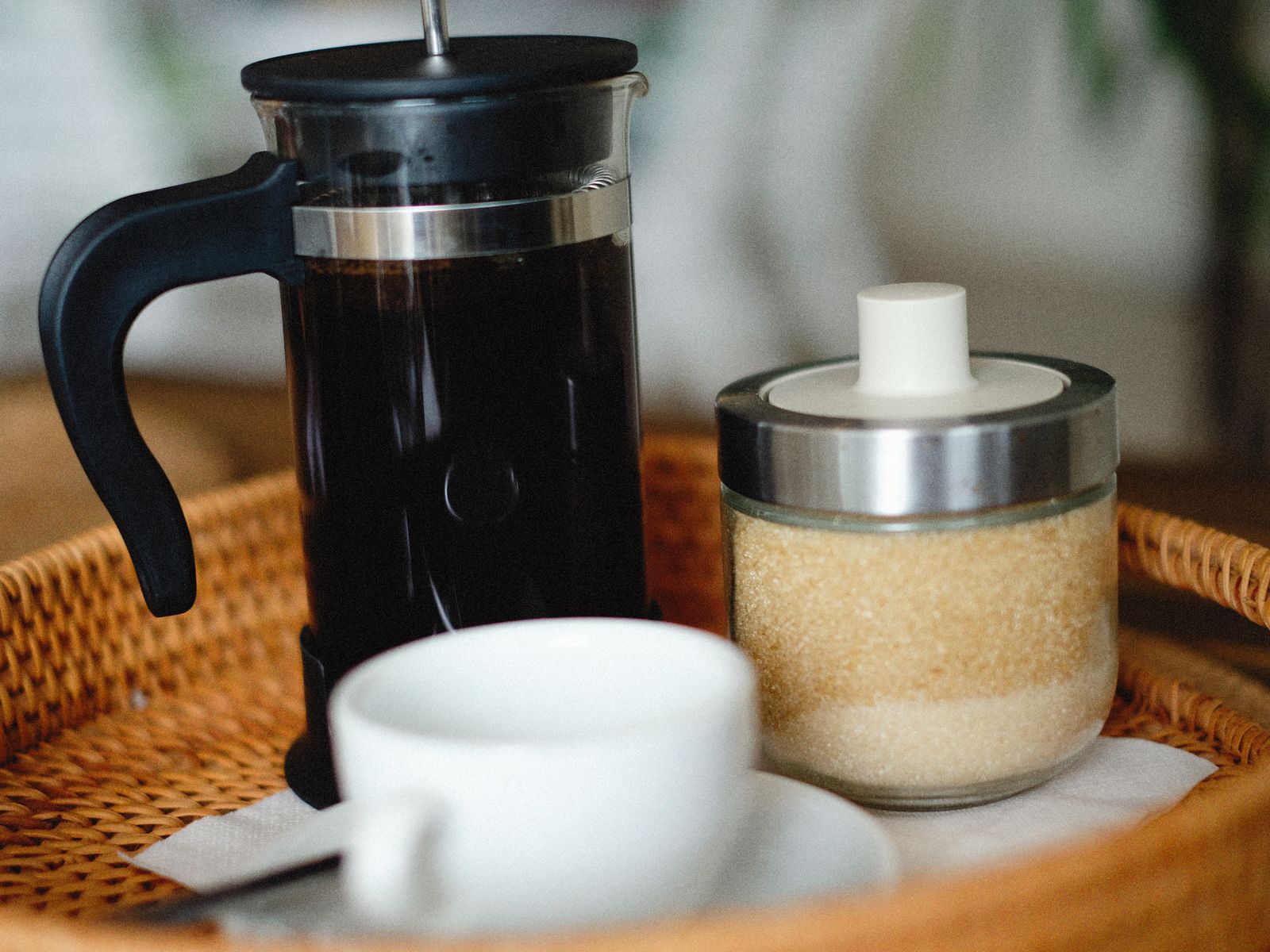
As soon as you plunge, pour every last drop into your cup or a separate carafe. This one habit fixes more French press complaints than anything else.
Troubleshooting your cup
If your coffee is bitter, your grind is likely too fine, your water too hot, or your steep too long. If it is weak and sour, grind slightly finer, use a little more coffee, or extend the steep by 30 seconds.
Grit in the cup almost always points to grind or a worn mesh screen. Change one variable at a time and you will zero in on your perfect cup quickly.
Keeping your press clean
Old coffee oils build up in the mesh and go rancid, adding a stale edge to fresh brews. Rinse the press and disassemble the plunger to clean the screen after each use.
Every week or two, give the mesh a deeper wash with dish soap. A clean press is a quietly important part of great French press coffee.
The bloom step that improves flavor
For an extra-sweet cup, try blooming before the main pour. Add just enough hot water to wet the grounds, about twice the coffee’s weight, and wait 30 seconds as the coffee puffs up and releases gas.
That trapped carbon dioxide otherwise pushes water away from the grounds and mutes flavor. Blooming first, then adding the rest of your water, gives a noticeably rounder, more even extraction, and it takes only half a minute.
French press versus other methods
Compared with a pour-over, the French press gives a heavier body and a bolder, oilier cup, while pour-over tends to taste cleaner and brighter. Neither is better; they simply suit different moods and moments.
Compared with a drip machine, the French press gives you far more control and a richer result for a fraction of the cost, at the price of a little hands-on effort. If you like a full-bodied, robust cup, the press is hard to beat.
Reducing sediment for a cleaner cup
Some sediment is part of the French press character, but you can minimize it with a few tricks. First, use a consistent coarse grind from a burr grinder, since fine dust is the main culprit.
Second, after stirring the crust at one minute, skim off the foam and floating grounds with a spoon before you steep the rest of the way. Third, press the plunger only partway down, stopping just below the water line, so you trap most of the grounds without stirring them back up. These small moves make a surprisingly big difference.
Scaling up or down
The 1:15 ratio scales cleanly to any size press or serving. For a single mug, try 20 grams of coffee to 300 grams of water; for a full 32-ounce press, use about 60 grams to 900 grams.
Keep the ratio steady and only the amounts change, which means your four-minute method stays exactly the same whether you are brewing for one or for a table full of guests. That reliability is a big part of why the French press is so beloved by home brewers.
Choosing the right French press
French presses come in glass, stainless steel, and plastic, and each has trade-offs worth knowing. Glass presses are affordable and let you watch the brew, but they can crack and lose heat faster. Stainless steel costs a bit more, keeps coffee hotter, and survives being knocked around, which makes it great for busy kitchens or travel.
Whatever the material, look for a well-fitting mesh screen, since a loose or flimsy filter lets more grounds slip through. A double-mesh filter traps sediment better and gives you a cleaner cup with less effort, so it is worth a small upgrade if your press allows it.
Your next step
Tomorrow, weigh 60 grams of coarse coffee to 900 grams of water, steep for exactly four minutes, press slowly, and pour it all out at once. Taste how much cleaner and richer it is than your usual cup.
According to the National Coffee Association, immersion brewing like the French press is one of the most accessible ways to make excellent coffee at home. Dial it in once and you will repeat it for years. Keep your ratio, your grind, and your four-minute timer consistent, and a great cup stops being luck and becomes a habit.

Maria Peixoto writes about making great coffee at home — no expensive machines, no barista jargon, just better cups every morning. Based in Portland, Oregon.