My kitchen scale died on a Sunday morning, mid-pour, with a French press half full and a house full of guests waiting. I panicked for about ten seconds, then remembered that people made good coffee for a century before digital scales existed. I grabbed a tablespoon, eyeballed the water, and the pot came out fine.
A scale is the most accurate way to measure coffee, and I still recommend one. But you do not need it to brew a solid cup. If you know how to measure coffee without a scale, you can get consistent results with the spoons and cups already in your drawer. Here is how.
Why Measuring Matters at All
Coffee that tastes weak, bitter, or sour usually is not the beans’ fault. It is the ratio. Too little coffee for the water and you get thin, sour brew. Too much and it turns heavy and harsh.
The sweet spot most brewers aim for is roughly 1 gram of coffee for every 16 grams of water, often written as 1:16. Since you are working without a scale, the goal is to hit that ratio closely using volume instead of weight. It will not be laboratory-precise, but it will be consistent, and consistency is what makes coffee repeatable.
How to Measure Coffee Without a Scale Using a Tablespoon
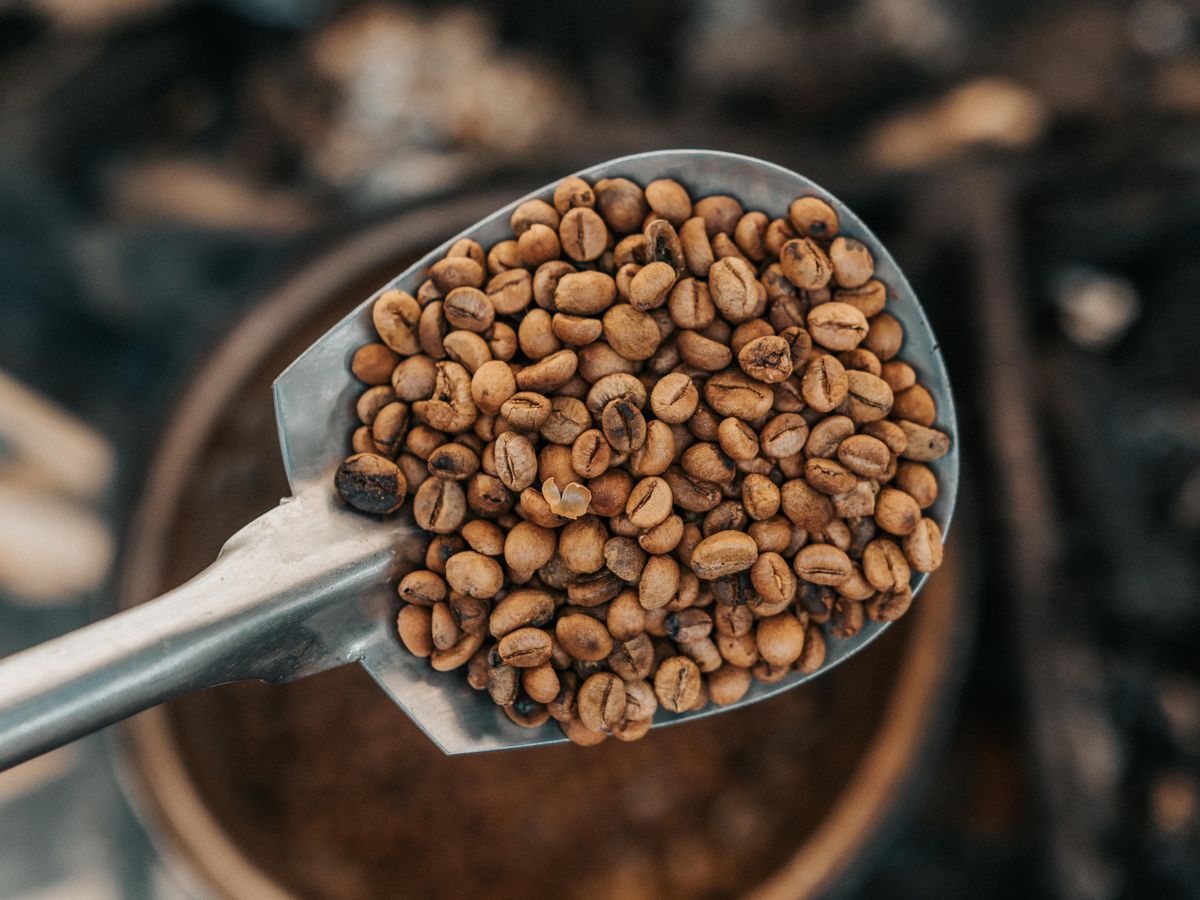
The most reliable no-scale tool is a standard measuring tablespoon. One level tablespoon holds about 5 to 7 grams of ground coffee, depending on the grind and the roast. For everyday brewing, treat one tablespoon as roughly 6 grams.
From there the math is simple. A standard mug holds about 12 ounces, or 355 grams, of water. At a 1:16 ratio that calls for around 22 grams of coffee, which is about 3.5 to 4 level tablespoons. Round to 4 tablespoons for a full, satisfying mug.
Here is a quick cheat sheet you can keep in your head:
- One small cup (6 oz): 2 level tablespoons of coffee.
- One large mug (12 oz): 4 level tablespoons.
- A full French press (32 oz): 9 to 10 level tablespoons.
- A standard drip carafe (40 oz): about 12 tablespoons, or three-quarters of a cup.
Measuring the Water Without a Scale
Water is easier than coffee because volume and weight line up almost perfectly: 1 milliliter of water weighs 1 gram, and a standard 8-ounce cup holds about 237 grams. So a measuring cup does the job of a scale here.
If you do not have a measuring cup, use your coffee mug as a unit. Fill it with water, pour it into the kettle, and count how many mugs you use. Then match your coffee to the total. Your favorite mug becomes a repeatable measuring device you already trust.
Most drip machines also have markings on the reservoir. Those “cups” are usually 5 ounces, not 8, so read them as a guide rather than gospel and adjust the coffee to taste.
The Coffee-to-Water Ratio, Simplified
If numbers make your eyes glaze over, memorize one rule: two tablespoons of coffee per six ounces of water. That lands close to the classic golden ratio and works across nearly every brewer.
Prefer stronger coffee? Nudge it to two and a half tablespoons. Like it milder? Drop to one and a half. Change one variable at a time so you can taste the difference and remember what you did. Dialing in your ratio is the fastest way to improve a cup, far more than any gadget, and learning to read a bag of coffee helps you pick beans that respond well to your ratio.
Grind Size Changes the Scoop
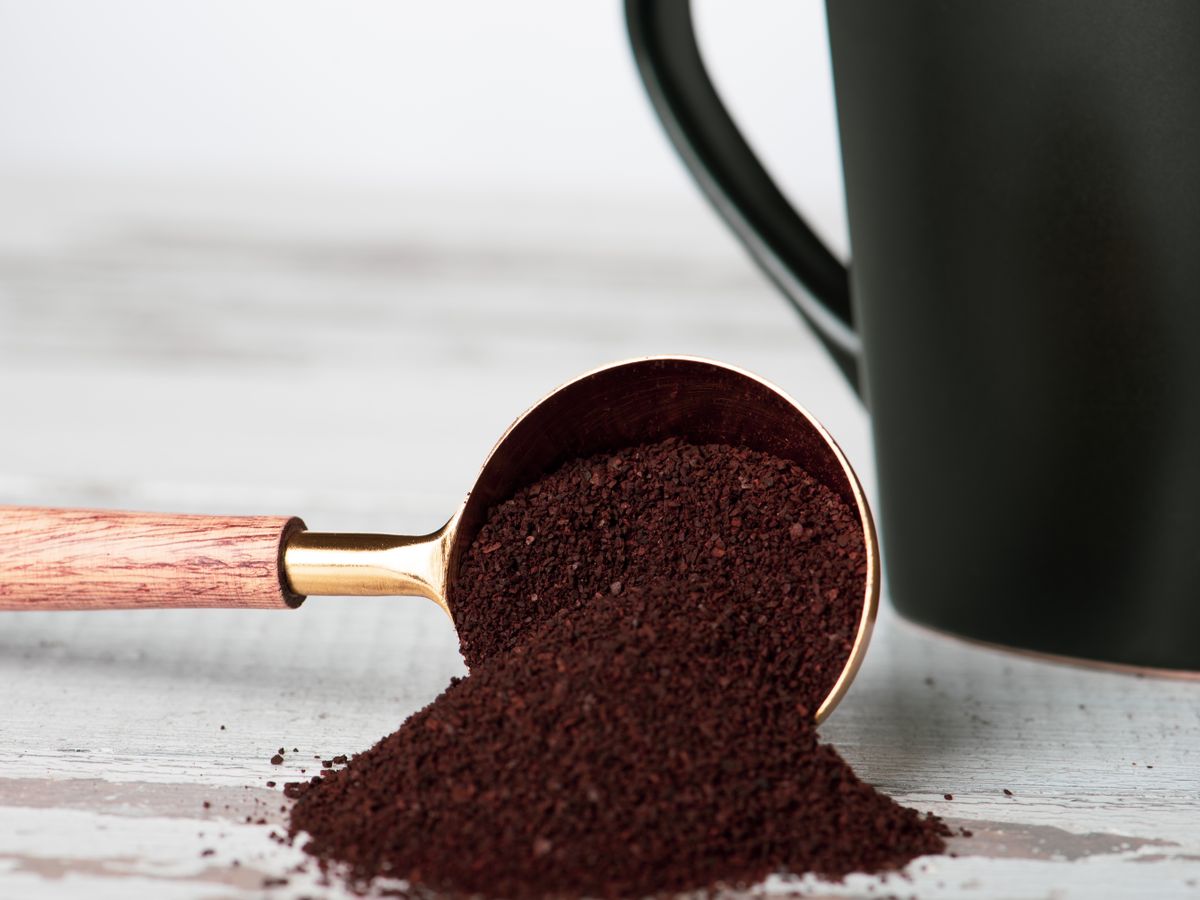
One catch with volume measuring: grind size changes how much coffee fits in a spoon. Finely ground coffee packs denser, so a tablespoon of espresso grind weighs more than a tablespoon of coarse French press grind.
The difference is small, usually a gram or two per spoon, but it adds up across a big pot. If you switch from a coarse to a fine grind, use a touch less by volume. If your coffee suddenly tastes stronger after changing grinders, this is often why. Understanding your grinder helps, and our comparison of burr and blade grinders covers how grind consistency affects every cup.
Everyday Objects That Work in a Pinch
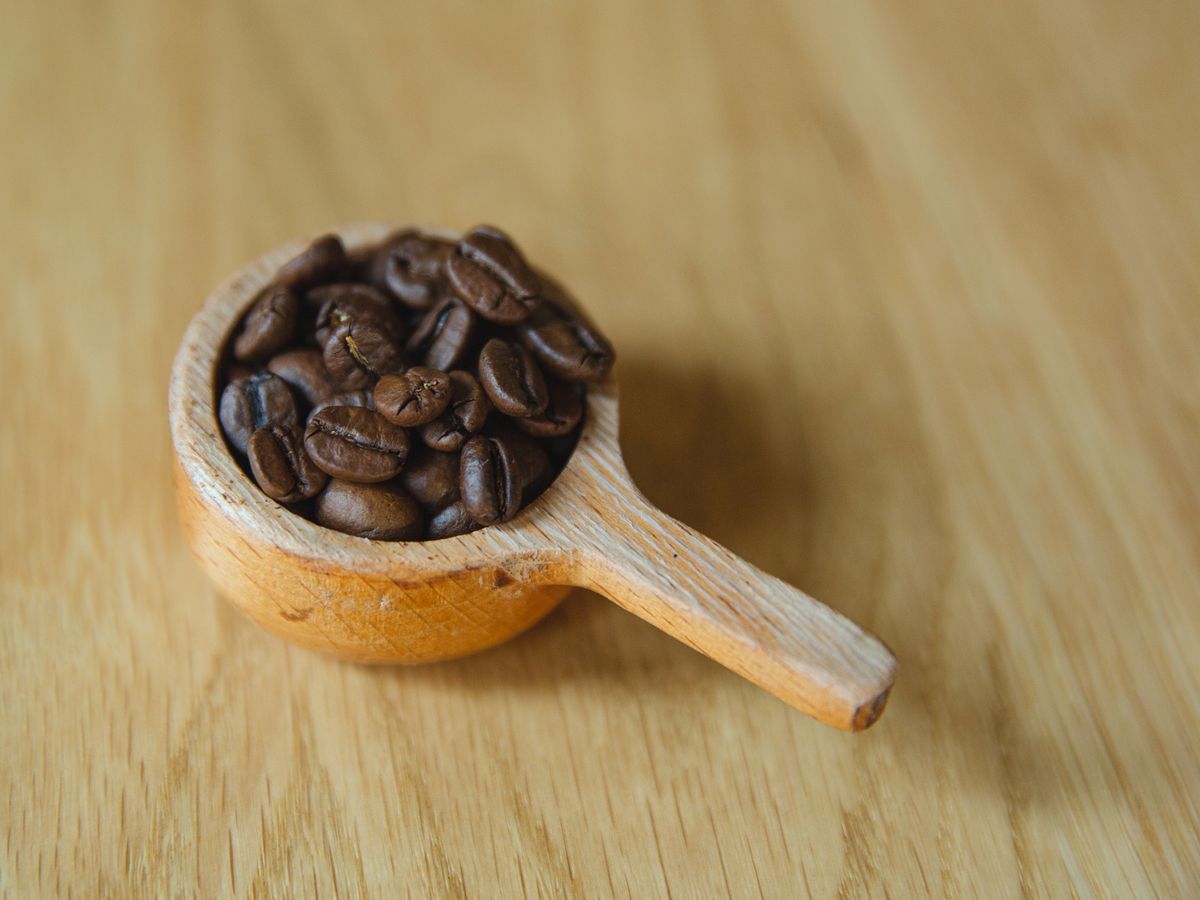
Caught without spoons or cups? A few common items get you close. A standard dinner spoon holds roughly one and a half tablespoons of grounds. A shot glass holds about three tablespoons. A regular disposable coffee cup is close to 12 ounces to the brim.
None of these are precise, but they turn a guessing game into an educated estimate. Once you know your favorite mug takes four dinner-spoon scoops for the strength you like, you have your own reliable recipe with zero equipment.
Train Your Eye and Your Taste
The real skill is calibration. Brew a cup you love, note exactly how many scoops and mugs of water you used, and write it down. After a week you will stop measuring consciously because your hand knows the dose.
Taste is the final scale. If a cup comes out sour and weak, add a scoop next time. If it is bitter and heavy, pull one back or add a splash more water. Your palate is a better judge than any number once you learn to read it. Storing beans well keeps that taste consistent too, which is why our notes on how to store coffee beans pair naturally with measuring by feel.
When You Really Should Use a Scale
Eyeballing is perfect for daily drip and French press. But a few situations reward precision. Espresso is unforgiving; a gram off can flip a shot from balanced to sour, so a scale earns its place there.
Pour-over enthusiasts chasing a specific recipe also benefit, since small changes are easy to taste. A basic kitchen scale costs 15 to 25 dollars and lasts years. If you fall in love with brewing, it is the best cheap upgrade you can make, but it is a want, not a need. The National Coffee Association recommends measuring by weight for consistency, and it is worth reading once you are ready.
Your Next Cup
Right now, grab a tablespoon and your usual mug. Use four level scoops of coffee and fill the mug with water, then brew as you normally would. Taste it, jot down what you used, and adjust by a single scoop tomorrow. In three days you will have a personal recipe you can repeat forever, scale or no scale.
Measuring for Different Brewers
Each brewing method has its own comfortable strength, and volume measuring adapts easily once you know the target. A French press likes a robust ratio, so lean toward the higher end of your scoops. A pour-over is more delicate and rewards a slightly lighter hand, which keeps the cup clean and bright.
Moka pots and stovetop brewers fill their basket to a set level, so you simply fill the basket without tamping and match the water chamber. Automatic drip machines are the most forgiving of all; four tablespoons per large mug of water will rarely steer you wrong. The point is that the tablespoon travels well across every method you own.
Common No-Scale Mistakes
The biggest error is heaping the spoon. A heaping tablespoon can hold nearly double a level one, which quietly doubles your dose and leaves you blaming the beans for a bitter cup. Level every scoop against the edge of the bag or a knife for consistency.
The second mistake is ignoring water volume entirely and just filling the pot to the top each time. If your pot is only half full one morning, the same scoop count will taste far too strong. Always measure both sides of the ratio, even roughly, and your cup will stay steady from day to day.
Maria Peixoto writes about making great coffee at home — no expensive machines, no barista jargon, just better cups every morning. Based in Portland, Oregon.