The gap between a $6 café iced latte and the one you can make at home usually comes down to a jar of cold milk, a shot of strong coffee, and about ninety seconds. Once you see how simple the drink actually is, paying full price starts to feel a little silly.
An iced latte at home costs roughly 60 to 90 cents a glass, tastes fresher because nothing sits in a display case, and lets you dial in exactly how strong and sweet you want it. This guide walks through the coffee base, the ratios, and a handful of small tricks that keep your drink from turning into watered-down disappointment.
What actually goes into an iced latte
An iced latte is just three things: a concentrated coffee base, cold milk, and ice. Café versions pull espresso, but you do not need a machine at home. Any method that gives you strong, low-water coffee will work, which is why the iced latte at home is one of the friendliest café drinks to copy in your own kitchen.
The classic ratio is about 1 part coffee concentrate to 3 parts milk, then ice to fill. For a standard 12-ounce glass, that means roughly 2 ounces of strong coffee and 6 ounces of milk, poured over ice that fills the rest. Prefer it stronger? Shift toward 1 part coffee to 2 parts milk and taste as you go.
Compared with a hot latte, the iced version leans on a bolder base because everything downstream dilutes it. Keep that one idea in mind and most of your iced latte problems solve themselves before they start.
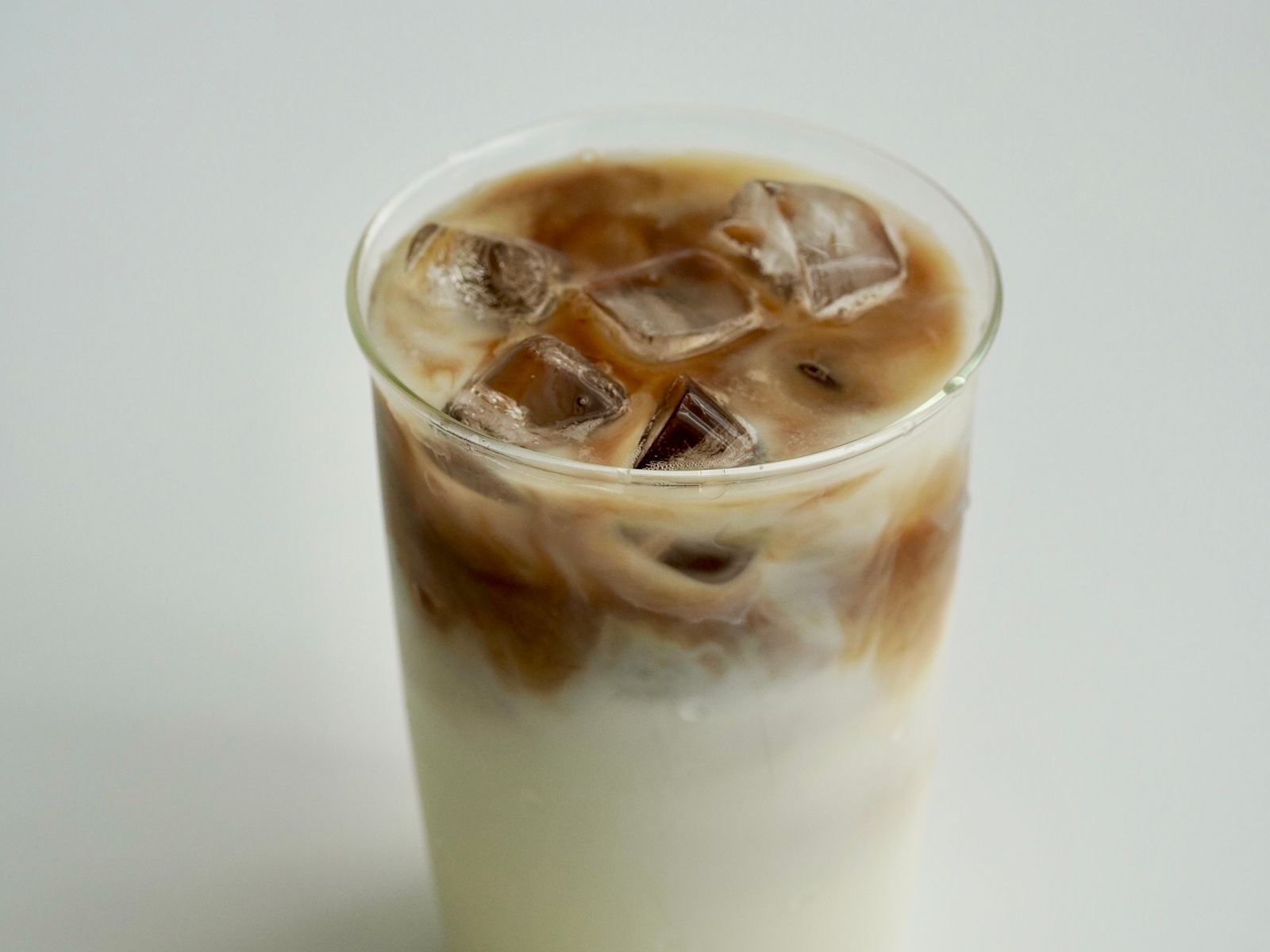
Making a strong coffee base without espresso
The single biggest mistake with an iced latte is starting with weak coffee. Ice melts and milk dilutes, so your base needs to punch above its weight. Aim for something close to double the strength you would happily drink hot.
Three easy ways to build the base
- Moka pot: brews thick, espresso-like coffee on the stovetop for around $25. Use it straight for the closest café match.
- Strong French press: use a 1:12 coffee-to-water ratio instead of the usual 1:16 to concentrate the brew, then let it cool.
- Cold brew concentrate: steep coarse grounds at a 1:8 ratio overnight for a smooth, low-acid base you can keep in the fridge for up to a week.
If you already batch a jug of concentrate using my method for making cold brew coffee at home, you are halfway to an iced latte before you even open the milk. Cold brew is my personal favorite base because it is forgiving and stays good for days.
How much coffee per glass
For a single 12-ounce iced latte, use about 2 ounces of concentrate or a double moka-pot shot. If you are using cold brew concentrate, that same 2 ounces already carries the punch of a double espresso, so resist the urge to pour more or the drink turns harsh.
Chill everything first
Hot coffee poured over ice melts it instantly and floods your glass with water. Either brew your base ahead and refrigerate it, or brew it hot and cool it fast in a metal cup set in an ice bath for about five minutes.
Cold milk matters too. Milk straight from the fridge, around 38°F, keeps the drink crisp and stops the ice from thinning out your carefully built base. Chilling your glass for a few minutes is a small extra step that keeps the whole thing colder for longer.
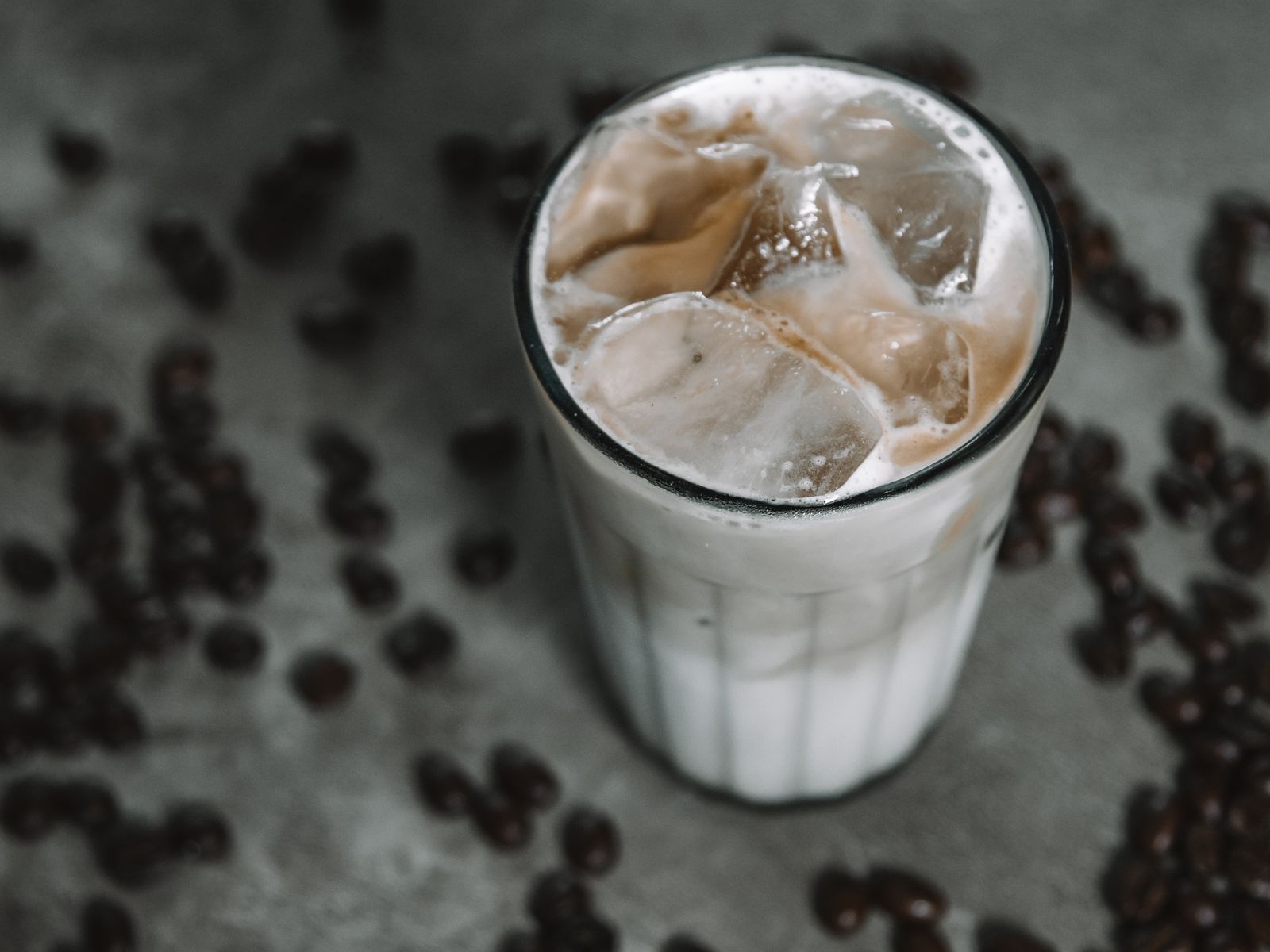
Choosing your milk
Whole milk gives the roundest, creamiest iced latte thanks to its fat content. Two percent is a lighter middle ground, and skim tastes thin once it hits the ice. Among plant options, oat milk is the standout because its natural sugars and body mimic dairy closely and it does not curdle in cold coffee.
If you like a little foam on top, a handheld frother works even on cold milk. For the full technique, see how to froth milk without an espresso machine and float a spoonful of cold foam over your finished glass for a café-style finish.
Sweetening it the smart way
Granulated sugar refuses to dissolve in cold liquid and settles into a gritty layer at the bottom of the glass. Make a simple syrup instead: stir equal parts sugar and hot water until clear, then cool. A tablespoon per glass is a sensible starting point.
Flavored syrups like vanilla or caramel follow the same logic, and a homemade batch costs a fraction of the bottled stuff. Add the syrup to the coffee base before the milk so it blends evenly rather than pooling at the bottom.
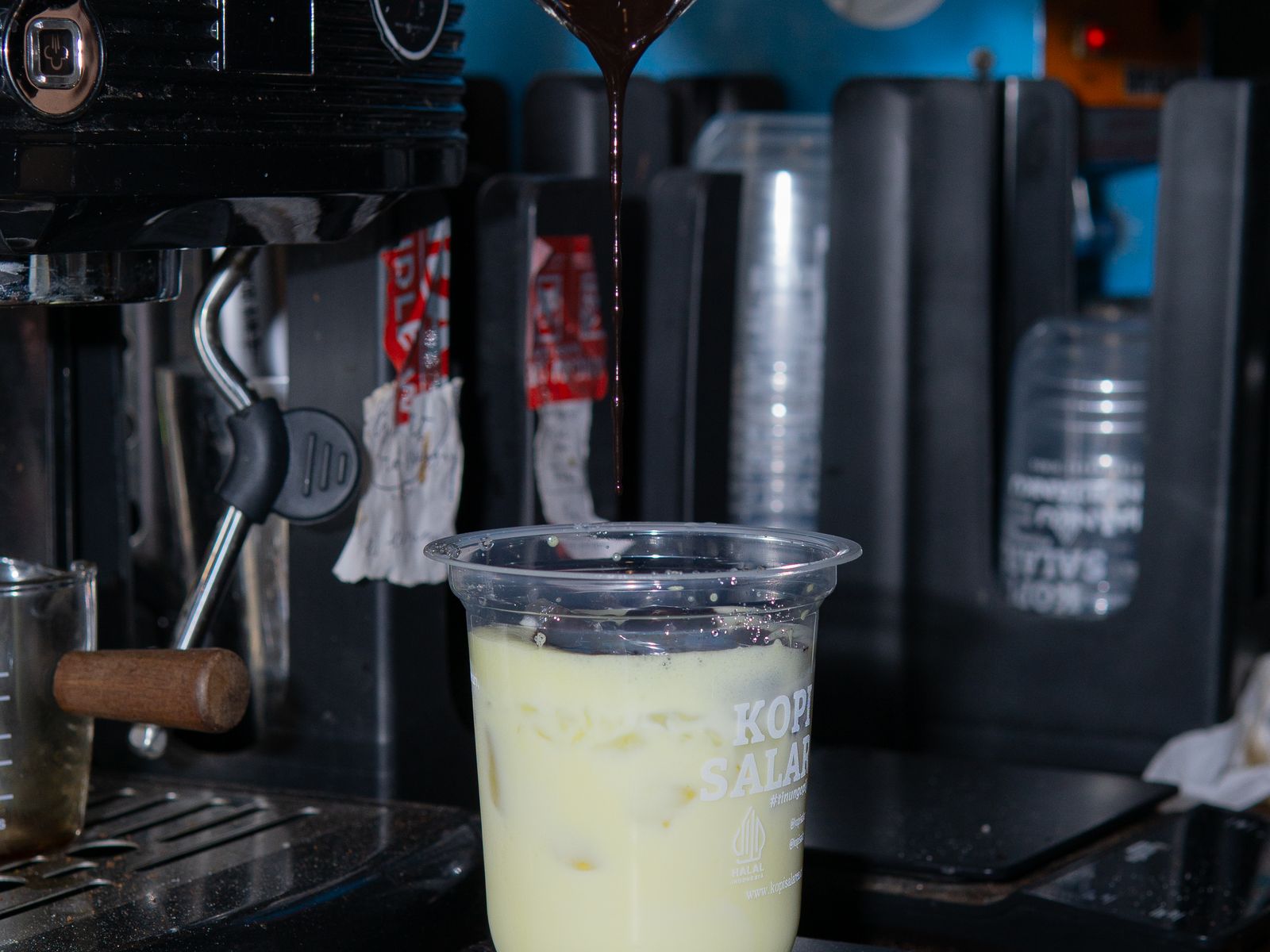
Building the glass, step by step
Order matters more than you would think. Layering the drink correctly keeps it from separating into a muddy mess and gives you that pretty café gradient that makes a homemade iced latte look the part.
- Fill a tall glass to the top with ice.
- Add your sweetener to the coffee base and stir until dissolved.
- Pour the cold coffee base over the ice.
- Slowly pour cold milk on top so it cascades down for a marbled look.
- Stir once before drinking to bring it all together.
Common problems and quick fixes
If your iced latte tastes watery, your base was too weak or your ice melted before you drank it. Brew stronger and use bigger ice cubes, which melt slower than small ones. Coffee ice cubes, frozen from leftover brew, are the ultimate fix because they never dilute the drink as they melt.
If it tastes flat or dull, your coffee may be stale or under-extracted. Fresh beans and correct grind size make a bigger difference than most people expect, a principle covered in the complete beginner’s guide to better coffee at home. According to the National Coffee Association, freshly roasted beans and the right water-to-coffee ratio are the foundation of any good cup, hot or iced.
And if it tastes too bitter, your base was over-extracted or too concentrated. Dial back the amount of concentrate or add a splash more milk until it lands where you like it.
Batch-prep so mornings are effortless
The reason café iced lattes feel convenient is that someone else did the prep. You can steal that advantage by making your base and syrup ahead. On a Sunday, brew a 32-ounce jar of cold brew concentrate and stir together a small jar of simple syrup. Both keep well in the fridge, the concentrate for about a week and the syrup for two.
With those two jars ready, assembling an iced latte on a busy weekday is genuinely a thirty-second job: ice, concentrate, syrup, milk, stir. Freeze a tray of coffee cubes at the same time and you have removed every excuse to overpay on the way to work.
One easy variation to try next
Once the basic iced latte at home feels routine, try a vanilla version. Add a tablespoon of homemade vanilla syrup to the base, use whole milk, and finish with a dusting of cinnamon. It tastes like a specialty-menu drink and costs about the same as the plain one.
You can just as easily swap in caramel syrup, a spoon of cocoa for a mocha twist, or a shot of decaf concentrate for the afternoon. The base stays the same, so every new drink is really just a small tweak away.
The bottom line
Once you have a strong cold base ready in the fridge, an iced latte at home takes less time than waiting in line. Start by brewing a small batch of concentrate tonight, and tomorrow morning your first café-quality glass will cost you less than a dollar. After a week of skipping the coffee shop, the savings add up fast.

Maria Peixoto writes about making great coffee at home — no expensive machines, no barista jargon, just better cups every morning. Based in Portland, Oregon.