Nothing kills the fun of learning latte art faster than the guilt of pouring cup after cup down the drain. Good news: you can practice latte art for weeks without wasting real milk and coffee, using cheap stand-ins and a few smart habits that let every pour teach you something.
The pour itself is a muscle-memory skill, and muscle memory doesn’t care whether the pitcher holds real steamed milk or dish soap and water. Here’s how to train efficiently and keep your grocery bill intact.
Why latte art wastes so much at first
Early on, most of your attempts won’t look like much, and that’s completely normal. The problem is that a real practice session can burn through a quart of milk and half a bag of beans in an afternoon.
Separating the skills is the key. Steaming milk, pulling shots, and pouring are three different things, and only the pour truly needs repetition. Once you realize that, you can practice latte art far more cheaply by isolating the pour.
The dish soap and water trick
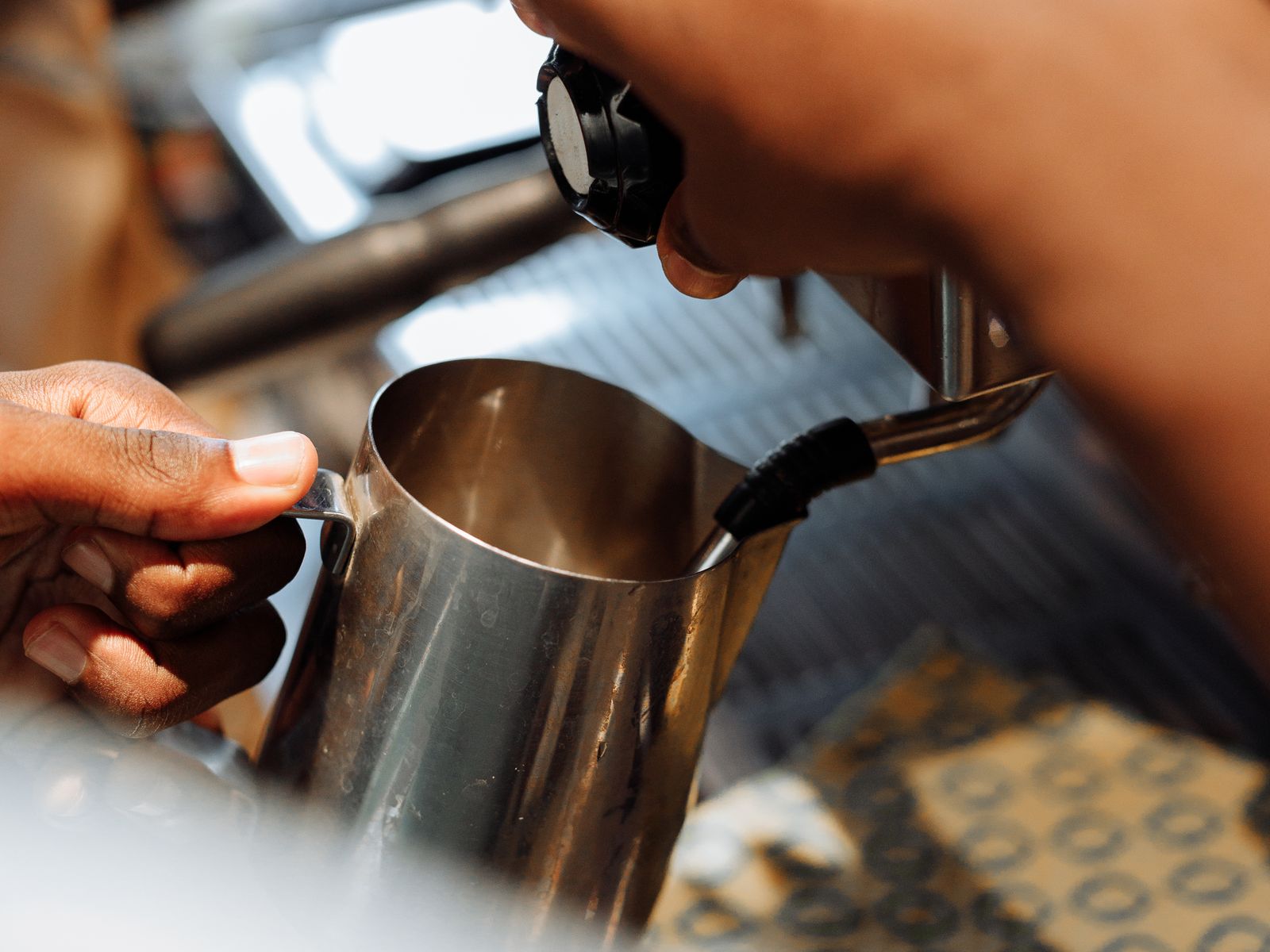
This is the single best way to practice the pour for free. Fill your milk pitcher with water and add a small squirt of dish soap, then froth or shake it to create a foam that behaves remarkably like steamed milk.
Pour it into a cup of plain water the same way you’d pour into espresso. The white foam shows your pattern clearly against the water, so you can drill your heart or rosetta again and again, then just rinse and refill. No milk, no beans, no waste.
Practice the motion without pouring at all
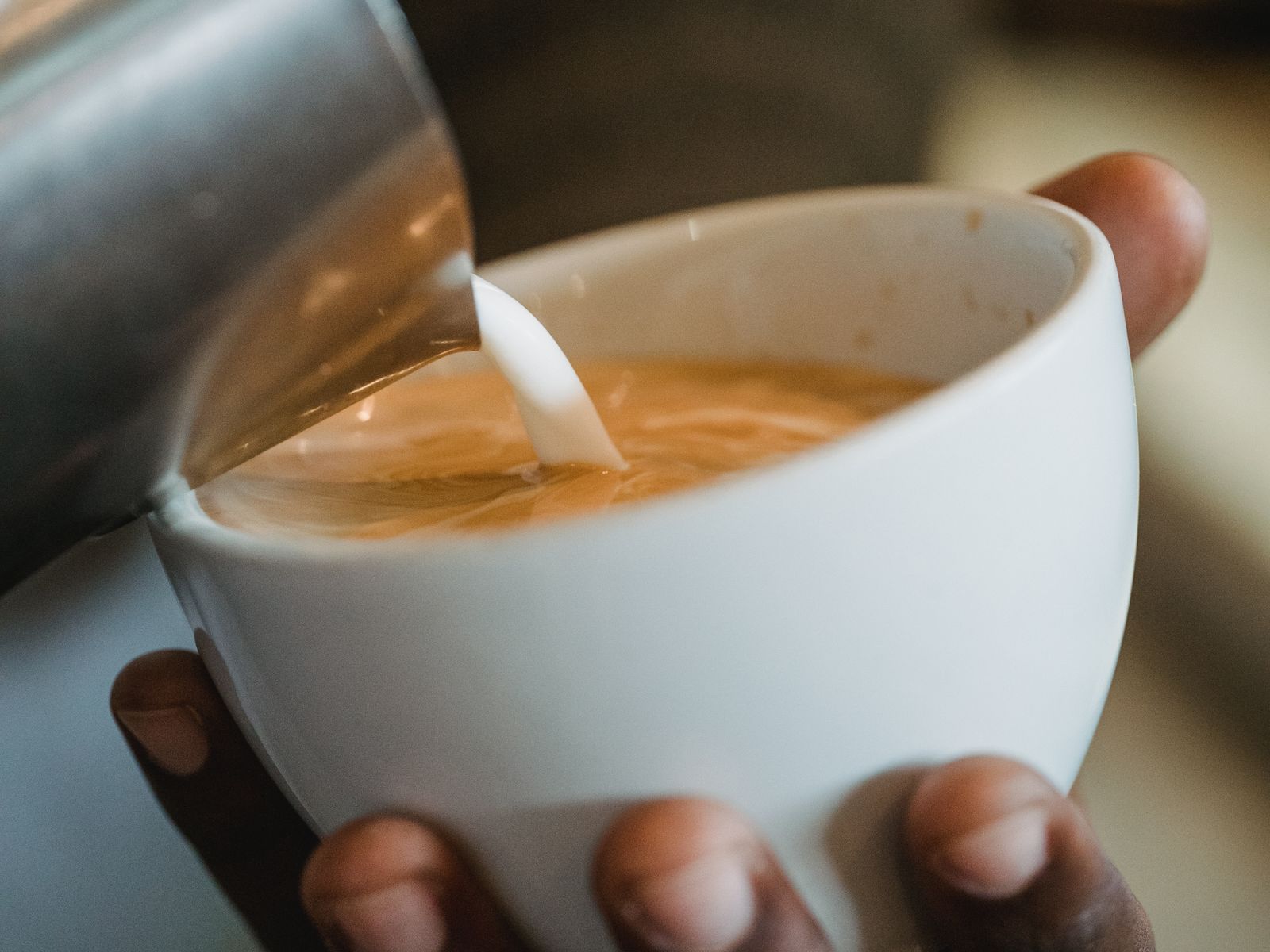
A lot of latte art is wrist control and pitcher height, and you can train both with an empty or water-filled pitcher. Practice the steady drop-and-lift motion over the sink until it feels natural.
Pay attention to the two phases every pattern uses: pouring high and thin to mix, then dropping the pitcher low and close to the surface to let the white foam surface. Grooving that rhythm dry means fewer wasted cups once real milk is involved. It also pairs well with learning to steam milk for good microfoam, which is the other half of the skill.
Cheap ways to practice with real milk
When you do want the real thing, a few habits stretch your ingredients much further:
- Use the cheapest whole milk: save the good stuff for cups you’ll drink; practice foam works fine with budget milk.
- Reuse the same espresso base: one strong shot or moka-pot brew can top up several practice cups.
- Practice on water tinted with instant coffee: it looks like espresso crema for pennies.
- Pour into a smaller cup: less milk per rep means more reps per pitcher.
- Actually drink your practice cups: make them decaf if you’re doing many in a row.
These small changes let you practice latte art daily without dreading the cost, which is what actually builds skill: frequent, low-stakes repetition.
Build a low-waste practice routine
Consistency beats marathon sessions. Ten minutes a day with the soap-and-water pitcher will improve your pour faster than one frustrating hour a week that empties the fridge.
Start each session with a few dry motions, then five or six soap-water pours focusing on one pattern. Finish with just one real cup so you can see how the free practice transfers. If your real pours keep falling apart in the same way, our guide to common latte art mistakes and how to fix them will help you diagnose it.
Start with the easiest pattern

Don’t chase the rosetta or swan on day one. The heart is the foundational pour, and mastering it teaches the drop-and-lift that every other design builds on.
Drill the heart with your soap-water setup until it’s reliable, then move on. Our walkthrough of latte art for absolute beginners breaks the heart down step by step. For the science behind milk texture, the Specialty Coffee Association is a solid reference.
Frequently asked questions
Does soap-and-water practice really work?
Yes, for the pour. The soapy foam mimics steamed milk’s flow closely enough to train your pitcher control and timing. It won’t teach you to steam milk, but it perfects the hardest part: the pour.
How long until I can pour a decent heart?
With daily 10-minute sessions, many people pour a recognizable heart within one to two weeks. Frequency matters more than session length when you practice latte art.
Do I need an espresso machine to practice?
Not for the pour. You can practice the pour with soap and water indefinitely, and use a moka pot or strong stovetop brew plus a handheld frother when you want to work with real milk.
Your next step
Tonight, fill your milk pitcher with water and a drop of dish soap, froth it, and pour a dozen hearts into a cup of water. That’s a full practice session for essentially nothing. Do it daily, and you’ll practice latte art your way to a clean heart without wasting a single cup of real coffee.

Maria Peixoto writes about making great coffee at home — no expensive machines, no barista jargon, just better cups every morning. Based in Portland, Oregon.