My first apartment kitchen had exactly 18 inches of free counter, a toaster, and nowhere obvious to make coffee. If your space looks the same, a dedicated coffee corner is still completely doable, and honestly more useful in a small kitchen than a big one, because it keeps your whole routine in one tidy spot.
You don’t need a pantry or a fancy cart. With a bit of vertical thinking and a few smart choices, even a single shelf can become a proper coffee station. Here’s how to build one that works.
What makes a good coffee corner
A coffee corner is simply one zone that holds everything you need to brew, so you’re not hunting through cabinets half-awake. The goal is for every daily item to live within arm’s reach.
That means your brewer, beans, grinder, a mug or two, and whatever add-ins you use. Keep it to the essentials; a small kitchen punishes clutter, and a lean coffee corner is far more pleasant to use every morning.
Choosing compact gear for small spaces
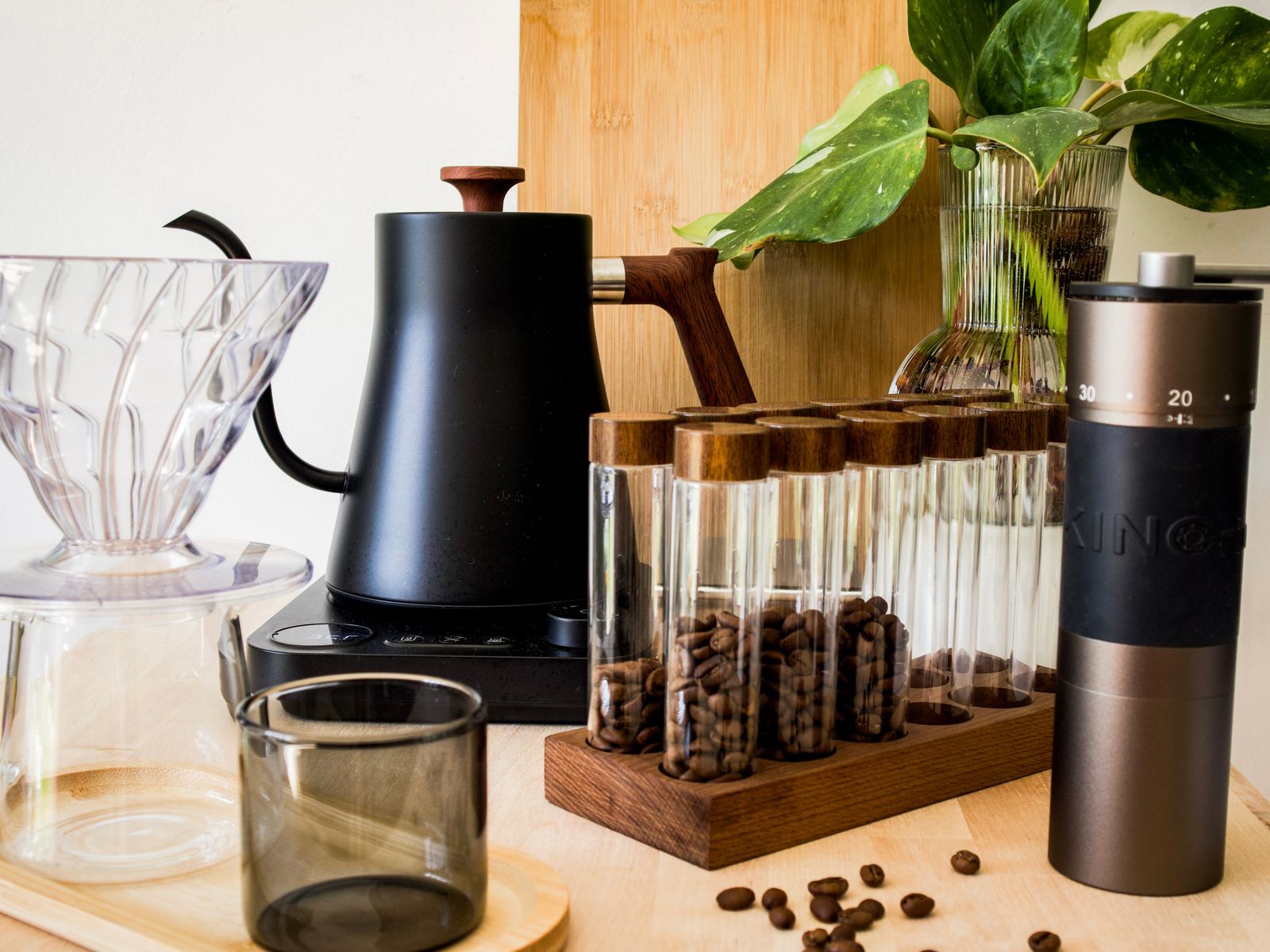
The secret to a small coffee corner is picking brewers with a tiny footprint. Manual methods shine here because they store flat and cost little.
- Pour-over dripper: a plastic or ceramic cone stores in a drawer and costs $8 to $20.
- French press: brews and serves in one vessel, no extra gear needed.
- AeroPress: tiny, nearly unbreakable, and doubles as its own storage.
- Manual hand grinder: a fraction of the width of an electric one and silent.
- Collapsible kettle: a gooseneck spout with a folding body saves real space.
If you’re just starting out, our guide to the best budget coffee makers for small kitchens compares compact brewers in detail.
Going vertical: storage tricks that save counter space
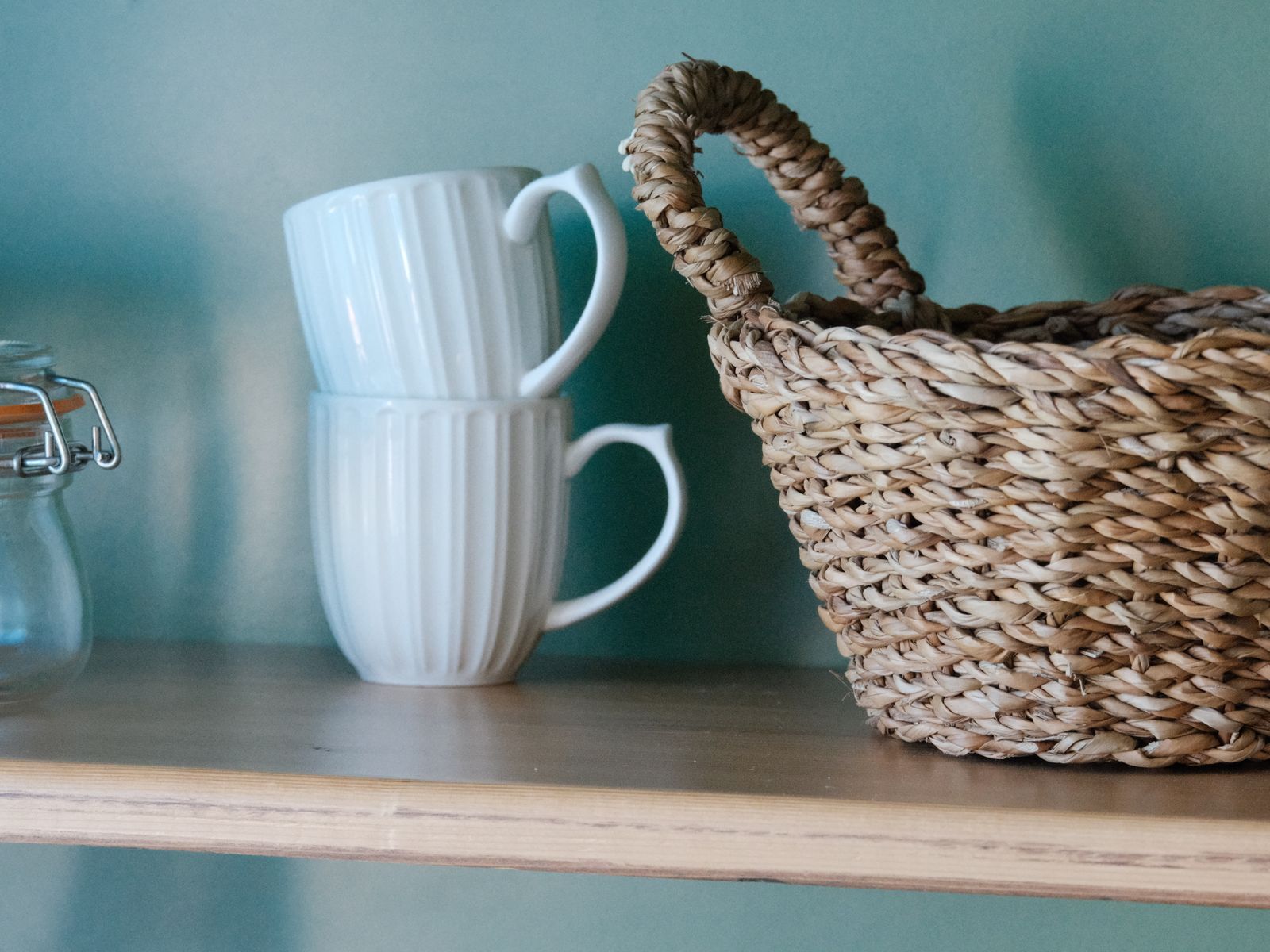
When you have no counter to spare, build upward. Walls and the sides of cabinets are prime real estate most people ignore.
Mount a small floating shelf for beans and mugs, add a few adhesive hooks under a cabinet for cups, and use a narrow tiered organizer to stack items in the footprint of one. A magnetic strip can even hold small metal tools. These tricks turn a cramped nook into a functional coffee corner without buying more counter.
A sample layout for a tiny kitchen
Picture one 18-inch stretch of counter. On it: your kettle and a French press or dripper, nothing else permanent.
Directly above, a single floating shelf holds an airtight bean jar and two mugs. A hand grinder and filters live in the drawer below, and a hook on the cabinet side holds a towel. That’s a complete coffee corner in under two square feet, and it costs far less than you’d think. For a slightly bigger budget build, see our complete home coffee bar setup for under $150.
Keeping your coffee corner organized
The best small setups stay usable because of one rule: everything returns to its spot after each brew. In a tight space, a single stray item makes the whole corner feel chaotic.
Store beans in one airtight container rather than several bags, wipe the surface daily, and resist the urge to display gear you rarely use. A cold brew jar can live in the fridge instead of on the counter, which is one reason batch cold brew suits small kitchens so well.
Making it feel intentional
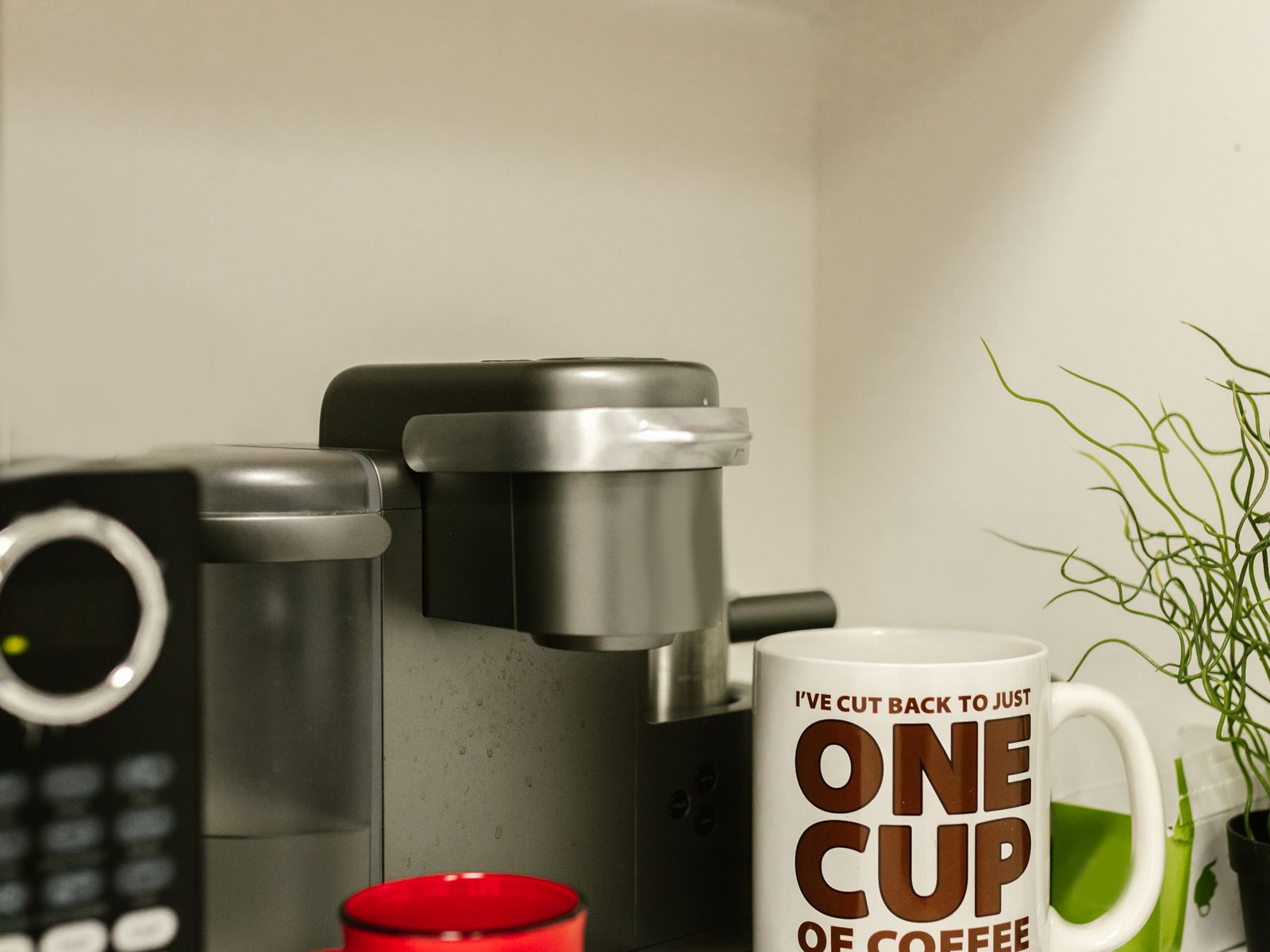
A coffee corner should feel like a little ritual, not an afterthought. A small tray to corral items instantly makes the zone look deliberate and keeps drips contained.
Add one nice touch, a favorite mug, a tiny plant, or a warm light, and the corner becomes somewhere you enjoy standing each morning. Good home coffee is as much about the routine as the cup, something the National Coffee Association notes drives the enduring popularity of brewing at home.
Frequently asked questions
How much space do I really need for a coffee corner?
As little as one to two square feet of counter plus a shelf above. With manual brewers and vertical storage, even a rental kitchenette has room for a working coffee corner.
What’s the cheapest way to start?
A pour-over cone, paper filters, and a jar for beans will get you brewing for under $20. Add a hand grinder later when your budget allows, and build up slowly.
Can I set up a coffee corner without any counter space?
Yes. A rolling cart or a wall-mounted fold-down shelf gives you a brewing surface that tucks away. Many renters build their entire coffee corner on a single small cart.
Your next step
This weekend, clear one small stretch of counter, add a shelf above it, and move every coffee item into that single zone. Start with the manual gear you already own. Within an afternoon you’ll have a coffee corner that makes your tiny kitchen feel a lot bigger.

Maria Peixoto writes about making great coffee at home — no expensive machines, no barista jargon, just better cups every morning. Based in Portland, Oregon.