For years my home coffee tasted like a weak, watery echo of what I ordered at cafes, and I blamed my beans, my kettle, everything but the real culprit. The fix turned out to be embarrassingly simple: I was using far too little coffee for the amount of water in my mug.
If your cup keeps coming out thin and sad, the coffee-to-water ratio is almost certainly the first thing to correct. Nail this one number and everything else, from grind to brew time, suddenly has something solid to build on.
Why the Coffee-to-Water Ratio Matters Most

The coffee-to-water ratio is simply how much ground coffee you use relative to the water you pour through it. Get it right and you extract enough flavor to fill the cup with body and sweetness. Get it wrong on the low side and no fancy technique will save you; the drink will taste hollow.
Most people underdose because they eyeball a scoop or two and call it done. A rounded tablespoon of grounds varies wildly in weight depending on the bean and grind, so guessing almost guarantees an inconsistent, usually weak result. Weight is the fix, and it costs nothing to start paying attention to it.
Think of the coffee-to-water ratio as the foundation of a house. You can have the best beans, a precise grinder, and a beautiful kettle, but if the foundation is off, nothing above it stands straight. This is why professionals obsess over it and why fixing it will do more for your morning cup than any single gadget you could buy.
The Golden Ratio: 1:15 to 1:17
The widely accepted starting point is a ratio between 1:15 and 1:17, meaning one gram of coffee for every 15 to 17 grams of water. A ratio of 1:16 is the reliable middle that suits most beans and most brewers, so it is where I tell every beginner to begin.
Here is what that looks like in practice for common cup sizes:
- Single mug (350 g water): about 22 g coffee
- Two mugs (500 g water): about 31 g coffee
- Small carafe (750 g water): about 47 g coffee
- Rule of thumb: divide your water in grams by 16
Because one milliliter of water weighs one gram, a kitchen scale lets you measure both coffee and water in the same units. If your coffee still tastes weak at 1:16, move toward 1:15 by adding a couple more grams of coffee; if it tastes harsh, drift toward 1:17.
Weighing vs Scooping Your Coffee
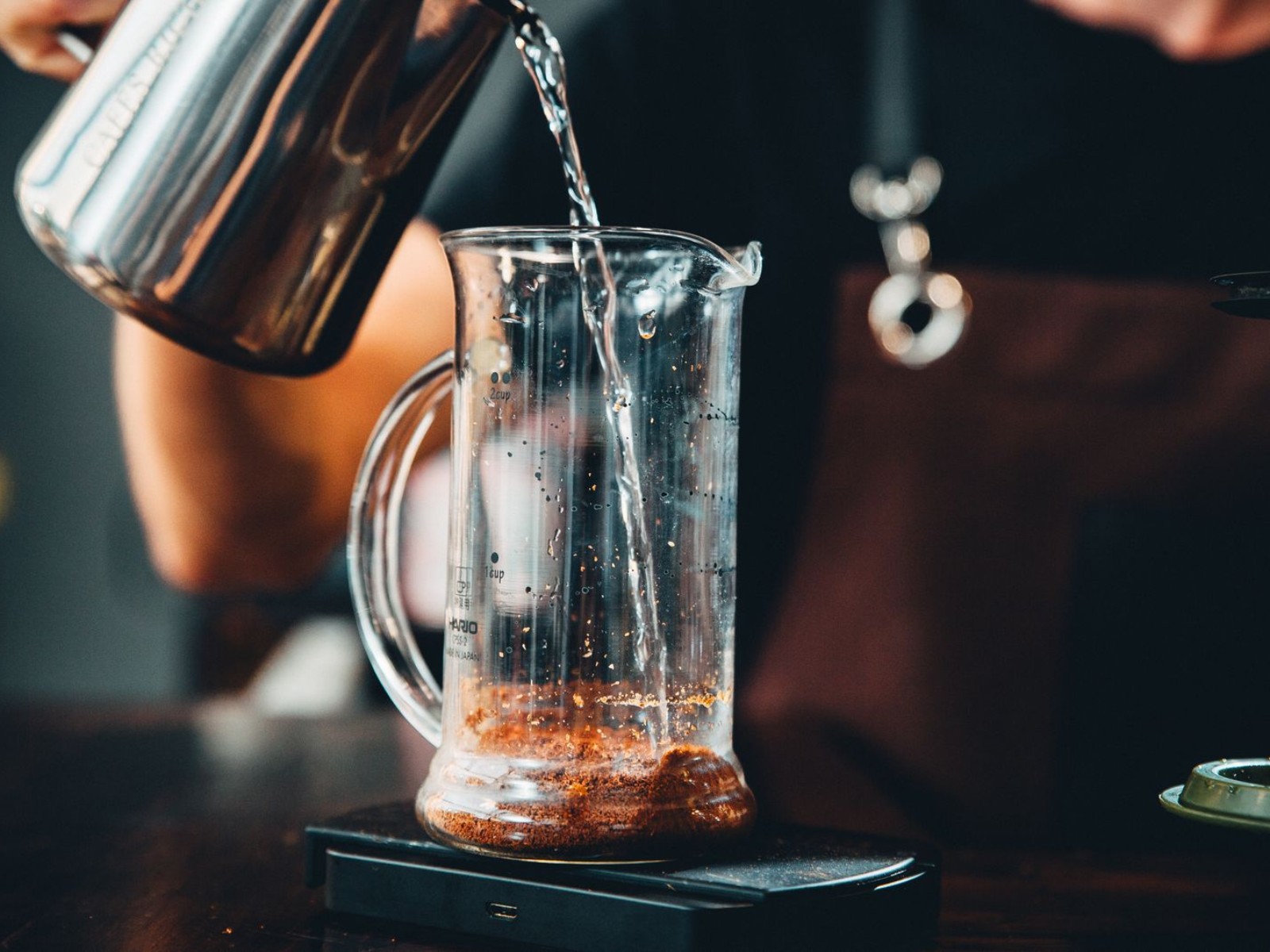
An inexpensive digital scale, often under $15, is the single most impactful upgrade for weak coffee. It removes the guesswork that scoops introduce and makes every cup repeatable, so when you find a ratio you love you can hit it again tomorrow.
If you truly have no scale yet, a level tablespoon of medium-ground coffee weighs roughly 5 to 7 grams, so aim for two tablespoons per 6 ounces of water as a rough stand-in. It is not precise, but it beats a single stingy scoop. For a deeper look at tools worth owning, my notes on whether a grinder is worth it cover the other half of this equation.
Adjusting Ratio by Brew Method
Different brewers like slightly different ratios. A French press, with its full immersion and metal filter, is forgiving and happy around 1:15 for a bold, full-bodied cup. If you are still dialing yours in, my guide to getting French press coffee right every time pairs perfectly with this ratio talk.
Pour-over methods shine closer to 1:16 or 1:17, where the paper filter and slower flow reward a touch more water. Drip machines generally do well at 1:16 too. Whatever the method, change only one variable at a time so you can actually taste what the ratio is doing.
Dialing In: Ratio, Grind, and Taste
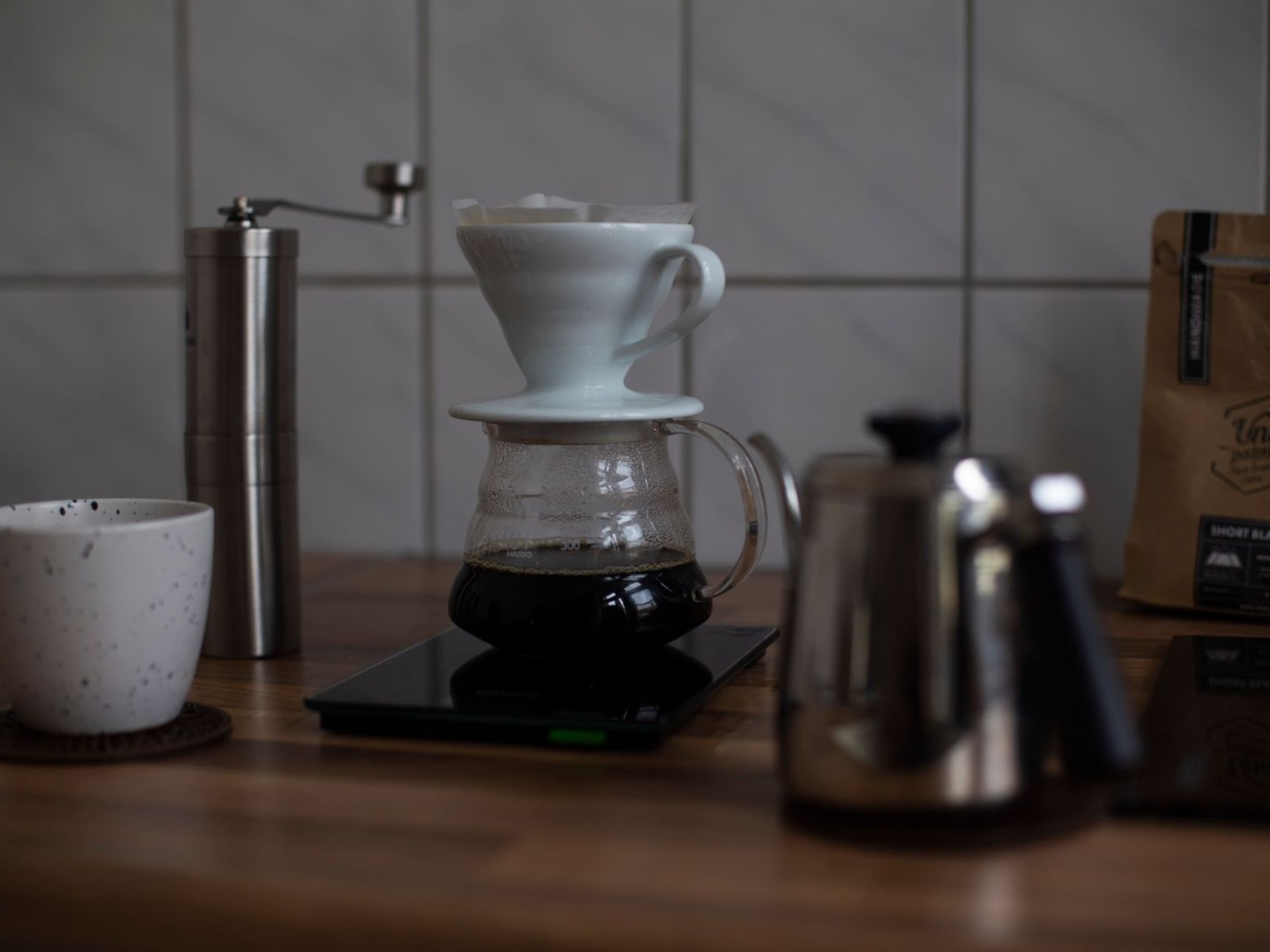
Once your ratio is locked, taste becomes your guide. Weak and sour usually means you are still underdosing or your grind is too coarse; the water rushes through without pulling enough flavor. Bitter and dry often means over-extraction, which you fix by coarsening the grind rather than cutting coffee.
Because grind size controls how fast water moves through the bed, it works hand in hand with your ratio. If you want to understand that relationship in detail, my breakdown of matching grind size to your brew method is the natural next step.
Water Quality and Temperature
Ratio does the heavy lifting, but two supporting factors keep weak coffee from creeping back. Use water heated to roughly 195 to 205 F, just off the boil, because water that is too cool under-extracts and tastes thin no matter how much coffee you use.
Filtered water helps too. The Specialty Coffee Association emphasizes that clean, balanced water is essential to good extraction, since coffee is about 98 percent water once brewed.
Common Ratio Mistakes to Avoid
The most common mistake is measuring water by the mug and coffee by the scoop, mixing two units that never line up. A coffee mug can hold anywhere from 250 to 400 grams of water, so the same two scoops produce a strong cup in a small mug and a weak one in a large travel tumbler. Pick grams for both and the problem disappears.
Another trap is chasing strength by grinding finer instead of adding coffee. A finer grind does extract more, but past a point it turns the cup bitter rather than strong. When a brew tastes weak, add coffee first and adjust grind second. Finally, do not forget that stale beans taste flat no matter how generous your ratio, so freshness and ratio work together.
Scaling the Ratio for a Crowd
The beauty of a ratio is that it scales cleanly. Once 1:16 tastes right in your mug, the exact same proportion works for a full carafe; you just multiply both numbers. For a pot serving four people you might use 60 grams of coffee to 960 grams of water, and it will taste like the single cup you already love.
When you brew large batches, keep the grind and water temperature consistent too, because bigger volumes hold heat differently and can shift the taste. Write your favorite recipe on a sticky note by the kettle so weekend guests get the same reliable cup as your quiet Tuesday morning.
Your Fix Starts Tonight
Weak coffee is rarely a bean problem and almost always a ratio problem. Pull out a scale, measure 1 gram of coffee for every 16 grams of water, and taste the difference in a single brew. From there, small nudges toward 1:15 or 1:17 let you tune the strength exactly to your liking, one repeatable cup at a time.

Maria Peixoto writes about making great coffee at home — no expensive machines, no barista jargon, just better cups every morning. Based in Portland, Oregon.